
Reaching for Meaning
What do we reach for when we feel trapped between two impossible choices?

There was a monk who appreciated his long walks along a cliff that overlooked the vast ocean. One day he slipped and fell, grabbing onto a small branch of a tree that hung out from the cliff. He was close enough to maneuver his way back up. But when he looked up he saw a tiger hungrily looking down at him.
If he were to go up, he would be eaten. If he were to let go, he would fall to his death.
He looked around for other options and saw a beautiful strawberry growing alone on a cliff vine within reach. Oh, how beautiful and sweet it looked to him!
He glanced up again to see the tiger waiting patiently. He looked below at his fall.
He smiled, took a breath, reached for the strawberry, enjoyed it, and then let go.
I first heard this story at eight years old from a progressive Lutheran minister, who later left the ministry to pursue other dreams. Like all good stories, it has stuck with me ever since. Looking back, I recognize this young minister as one of my teachers.
Now, in the remembrance of this story, I see us individually and collectively on this cliff. We often perceive ourselves as being caught between two unfavorable options. Fortunately, integral within such moments is always a third option—an opportunity to define the moment with what we reach for.
Typically, there exists a multitude of possibilities unfolding within every given moment, no matter how limited our perception of our situation may be. In fact, our perceptions limit us. Because we have not looked for the third possibility (the strawberry) we have not opened ourselves up to the vast potential of the situation. (The strawberry represents the immeasurable third option.)
We are always given a third option: to reach for something in the moment that will define and frame our experience. When we know how to broaden our perceptions to the multitude of possibilities, rather than getting caught up in just solving a problem, real possibilities emerge.
When our perspective is narrowed down to the problem, we often lose sight of the myriad opportunities to make meaning with our experience. Furthermore, our ability to be creative within this particular circumstance also increases with this widening view.
The way we become aware of this manifold “third option” is through engaging with the underlying paradigm behind my book—The Zero Point Agreement, — how to be who you already are.
“I live life from my side” is the personal expression of the zero point agreement, and it means to live from the inside out, instead of letting outside circumstances dictate our experiences and responses. All other agreements and possibilities come down to understanding this core agreement—to live life consciously and purposefully from our side.
In times like these, when democracy itself is fragile, it can seem as if we are caught between two choices: despair or fury. Either we withdraw in hopelessness, or we live in constant reaction to events beyond our control.
But there is always a third option.
The third option is to live life from our side. Instead of letting the outer chaos determine who we become, we choose our response from within. We act with integrity. We participate in civic life. We remain grounded in our values even when the moment is turbulent. We remain engaged in what brings us peace and joy.
Democracy ultimately depends on citizens who refuse to abandon that inner ground.
“Ours is not the task of fixing the entire world all at once, but of stretching out to mend the part of the world that is within our reach.” –Clarissa Pinkola Estés
“Similarly there is no point in asking the meaning of life, as life too is the meaning, which is self-referential and capable of changing, basically when this meaning changes through a creative perception of a new and more encompassing meaning.”
— David Bohm, “Soma-Significance and the Activity of Meaning,” from The Essential David Bohm
The Power of Agreements
Back in 1989, when I published my first book (Hidden Victims, Hidden Healers: An Eight Stage Healing Process for Friends and Family of the Mentally Ill) my initial title was Silent Agreements. I point this out because I have a long history and familiarity with how agreements form our lives.
Agreements are attitudinal contracts aligned with unconscious and consciously held intentions and beliefs. As it turns out, most agreements are unspoken and reside in our unconscious.
Every act, every choice, every experience expresses what we are in agreement with and what we are not in agreement with. Basically, what you experience in the outer world is based in part on what you are in agreement with internally.
Wherever there is a decision or action, there is an agreement; wherever there is an agreement, there are beliefs and assumptions sustaining it.
Agreements are the reason we do what we do. Each and every decision we make either acts out or supports an agreement we have made. Therefore, to make these unconscious agreements conscious increases our human potential. And gives us more possibilities to act consciously and purposefully.
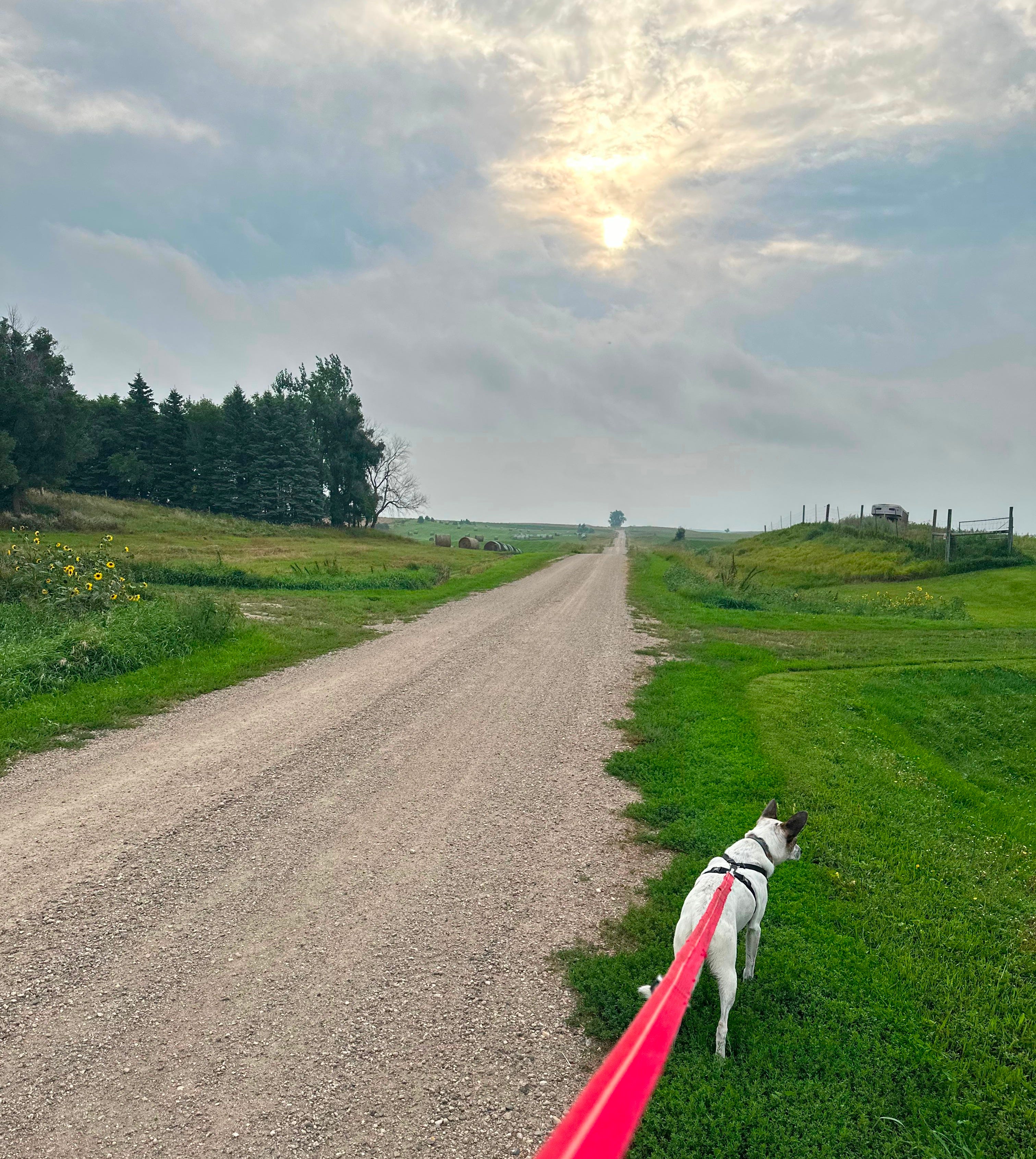
In the end, the story of the monk on the cliff reminds us that life almost always gives us more room than we think. Even when circumstances feel dire—when the tiger waits above and the drop below feels certain—we are not without agency. There is always the strawberry within reach. Living from the zero point, from our side, gives us a long leash with life. When we become conscious of our agreements—of the attitudes, beliefs, and intentions guiding our choices—we step out of automatic reactions and into a more purposeful way of participating in the world. As our perceptions widen, we discover that meaning, creativity, and responsible action are still available to us, even in difficult times. In fact, it is precisely in such moments that our agreements matter most, because the world we experience, and the world we help create, emerges from what we choose to reach for.
“It’s your life—but only if you make it so. The standards by which you live must be your own standards, your own values, your own convictions in regard to what is right and wrong, what is true and false, what is important and what is trivial. When you adopt the standards and the values of someone else… you surrender your own integrity. You become, to the extent of your surrender, less of a human being.”
— Eleanor Roosevelt
An article in Spirituality & Practice on The Zero Point Agreement.
✍️ Writing Prompt
Reaching for the Strawberry
Write about a pivotal moment in your life when you felt caught between two difficult options—when it seemed there was no good way forward. Describe the situation as clearly as you can. Then ask yourself: Was there a third option I did not initially see? If so, what might the “strawberry” have been in that moment? What did that experience teach you about how you make meaning when circumstances feel tight or overwhelming?
👁️ Active Contemplation
Noticing Your Agreements
Throughout the day, gently notice the small agreements guiding your reactions. When something irritates you, discourages you, or pulls you into worry, pause and ask: What agreement am I acting from right now?
Is it an agreement with fear, urgency, helplessness, or reactivity?
Then ask a second question: What agreement would bring me back to my side?
Perhaps an agreement with patience, participation, dignity, curiosity, or courage.
Simply noticing these agreements begins to widen the field of possibilities.
🌿 Contemplative Action
A Small Act From Your Side
Choose one small action today that expresses the person you intend to be in the world. It may be as simple as reaching out to encourage someone, engaging respectfully in civic life, tending something in your community, or stepping outside to reconnect with the living world.
Do it consciously—not as a reaction to events, but as an expression of your deeper agreement with life.
In this way, you practice reaching for that strawberry.

Hmmmmm..,. Not sure a single strawberry would do it for me. I’m not worried about dying but one strawberry would not help me decide to just let go. It’s a fine parable but the analogy for the 3rd way has to have more substance to it, I think. ❤️😇🥰